
Dollar and Oil surge amid Iran conflict, Bitcoin pressured

- Global markets extend losses on geopolitics
- USD best performing G10 currency this week
- Oil spikes higher following closure of Strait of Hormuz
- Gold tumbles as dollar and Treasury yields surge
- US NFP on Friday remains major risk event
BTC remains subdued with prices trading below $70,000 as of writing, as mounting geopolitical risk fuels widespread risk aversion.
Over the weekend, US–Israel strikes killed Iran’s Supreme Leader - a dangerous turning point in an already distressed region. Tehran fired back at Israel and hit US bases across the Gulf. With missiles still flying, the risk of a full-blown regional escalation is growing by the minute.
Bitcoin, among other risk assets could be set for a world of pain as investors flock to safe-haven destinations.
Potential Scenarios:
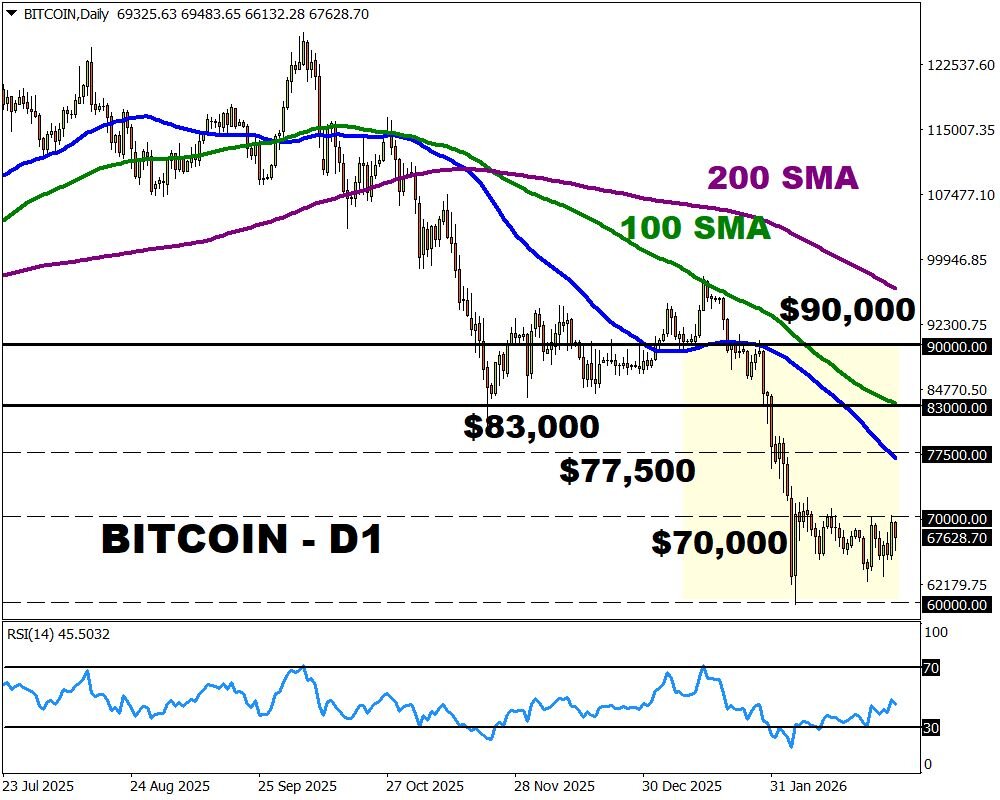
- Bullish Scenario: A decisive daily close above the $70,000 resistance zone with strong volume could indicate some bullish strength, opening a path back toward $77,500.
- Bearish Scenario: If Bitcoin breaks below the critical $65,000 support. Failure to hold above it risks further decline toward $60,000 with a deeper selloff opening the doors toward $55,000.
Gold (XAUUSD) & SILVER (XAGUSD)
Potential trading range – XAUUSD, source: Bloomberg

Potential trading range – XAGUSD, source: Bloomberg

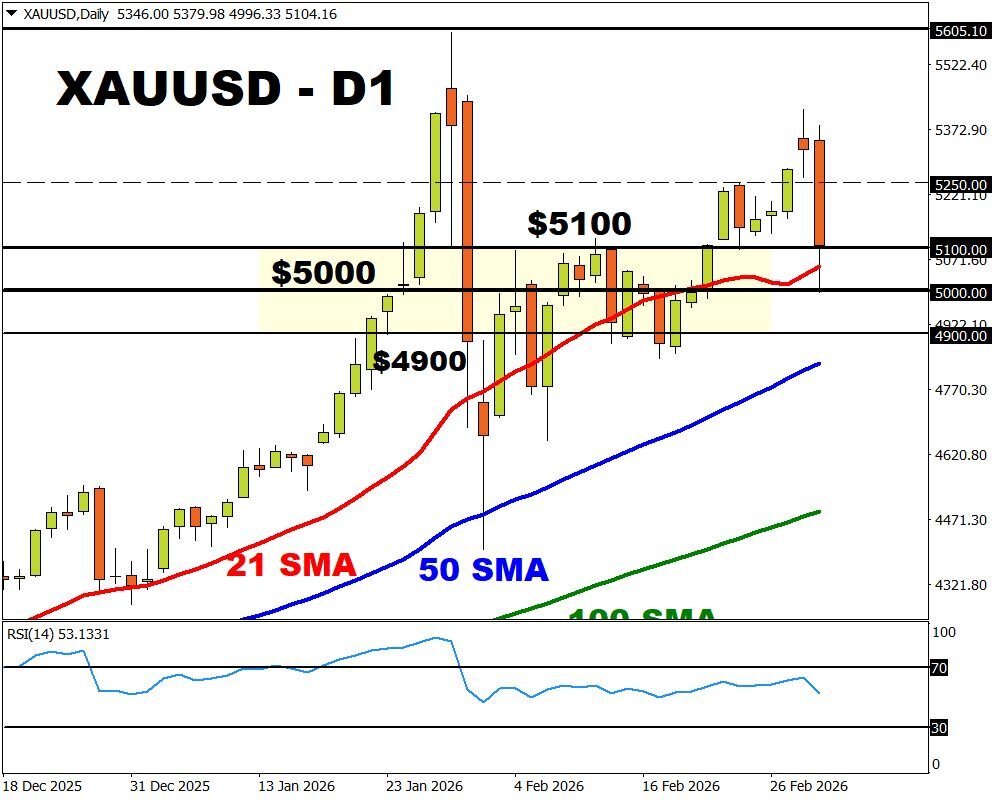
Gold kicked off the new week gapping higher as traders scrambled to price the chaos from the Iran crisis.
Prices jumped as much as 2.6% on Monday before tumbling 4% as traders weighed the escalating war in the Middle East against a stronger US dollar.
The dollar has gained almost 1% so far this week due to the flight to safety while rising Treasury yields also weighed on precious metals despite the risk-off sentiment.
Silver has also mirrored gold’s performance, tumbling nearly 15% from its weekly high.
Beyond geopolitical developments, gold prices may be heavily influenced by Friday’s US jobs report. The US economy is expected to have created 60,000 jobs in February compared to 130,000 in the previous month while the unemployment rate unchanged at 4.3%. Ultimately, another upside surprise could further shave Fed cut bets – boosting the dollar as a result.
Potential Scenarios:
Gold
Bullish Scenario: A firm close above $5,350/oz fueled by geopolitical risk could propel gold toward the $5,400–$5,550 per ounce resistance zone
Bearish Scenario: Failure to hold recent gains above $5,250/oz amid a resurgent dollar and rising Treasury yields could trigger a selloff back toward the $5,100–$5,050 per ounce support area
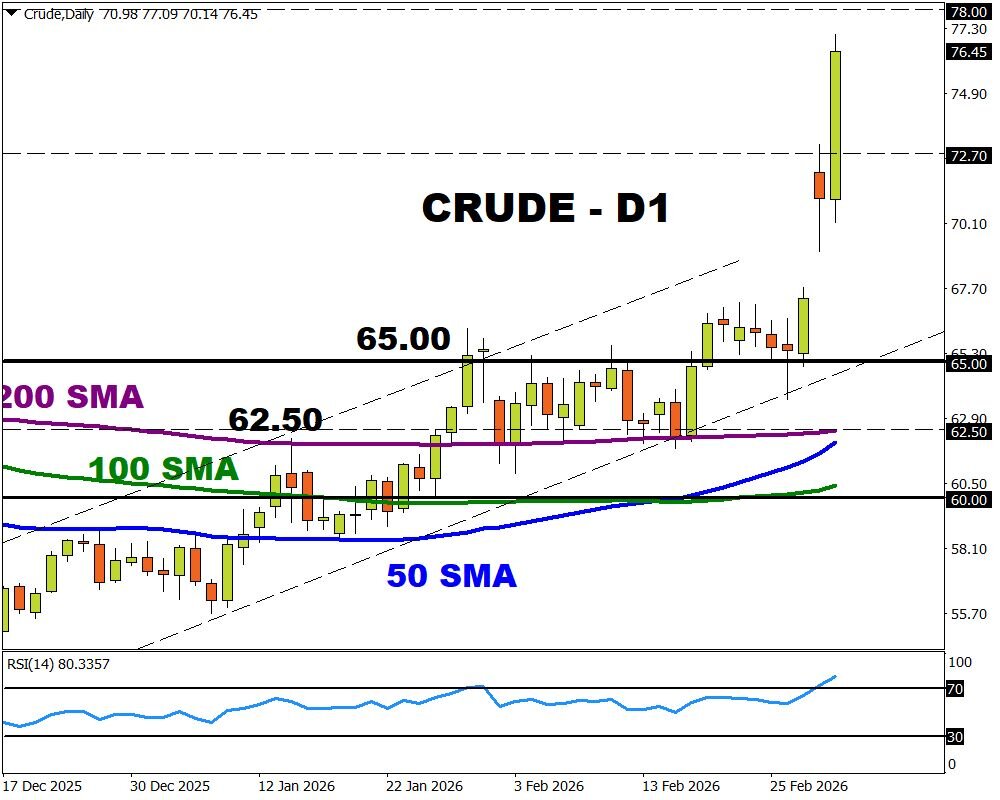
Oil benchmarks exploded higher after Tehran vowed a full closure of the Strait of Hormuz.
This has pushed 2026 gains to over 30% with Brent trading above $80 after spiking about 7% on Monday. WTI is trailing behind, trading around $75 thanks to supply side fears. Oil prices have spiked, along with natural gas and petroleum products such as diesel. This may fan fears over a wave of inflation across the world
Potential Scenarios:
Crude Oil
Bullish Scenario: The direct military escalation in the Middle East has led to the closure of the Strait of Hormuz. Any supply shock could drive Brent toward $90 and WTI toward $85.
Bearish Scenario: Easing tensions or the re-opening of the Strait of Hormuz may cool supple-side fears. A break below the $78 support could trigger a sell-off toward $75 for Brent and $69 for WTI.