


Oil commodity trading: How to trade oil
Learn the basics of oil trading, including what impacts oil prices, popular strategies and the different ways you can trade it.
* Trading is risky. Your capital is at risk.
Crude oil is one of the most actively traded commodities in the world. Used to power vehicles, generate electricity and manufacture everyday products, oil is a central cog in the global economy and consistently in high demand.
This has earned it the nickname of “black gold”. Read on to find out all you need to know about oil trading, including what currency it’s traded in, different trading strategies, and how to trade oil with FXTM.
Key takeaways
Success in the forex market means understanding the fundamentals, picking the right broker and platform, and building a strong trading plan.
Managing risks is key in forex trading. Using stop loss and take profit orders is vital to safeguard investments.
Managing risks is key in forex trading. Using stop loss and take profit orders is vital to safeguard investments.
Managing risks is key in forex trading. Using stop loss and take profit orders is vital to safeguard investments.
What is oil trading?
Put simply, oil trading is the buying and selling of oil with the aim of making a profit. If you had the resources (and storage facilities), you could do this by buying the physical commodity. But the most common way to trade oil is to speculate on its price using derivatives.
A derivative is a financial contract between two parties that ‘derives’ its value from the price of an underlying asset, like oil. When you trade a derivative, you can profit from changes in oil’s price, without having to take ownership of actual barrels of oil.
Hundreds of different types of crude oil are traded on global markets, but only two serve as worldwide leading benchmarks for oil prices: Brent and West Texas Intermediate (WTI). For beginners, we recommend focusing on these.
Brent Oil
This comes from oil fields in the North Sea. Up to two-thirds of global oil trades are on Brent. On the FXTM platform, you’ll see it listed as UK Brent oil.
WTI Crude Oil
As the name suggests, this comes from US oil fields, primarily in Texas, Louisiana and North Dakota. WTI is the main benchmark for oil consumed in the US. On the FXTM platform, you’ll see it listed as US Crude oil.

Why is oil trading popular?
Crude oil is an extremely valuable resource within the commodities market. It’s the world’s primary energy source, refined to make products like gasoline, diesel and other chemicals.
As oil is finite, it can see massive price swings as supply and demand fluctuates. This volatility makes oil extremely popular for traders, offering up the possibility of large gains – although there’s always the risk of loss, too.
Ways to trade oil
There are three main ways to trade oil: the oil spot price, oil futures or oil options.
With FXTM, you can use CFDs to speculate on oil spot prices, without having to own any barrels of oil yourself. If you think the price of oil will rise, you can ‘buy’ an oil CFD. This is known as ‘going long’.
However, if you think the price of oil will fall, you can also ‘sell’ an oil CFD. This is known as going short. Trading CFDs enables you to profit from drops in oil prices, rather than just rises.
What is the oil spot price?
Oil spot prices represent the cost of buying or selling oil at the current market level, or ‘on the spot’. They reflect how much oil is worth right now, as opposed to futures prices which indicate how much the markets believe oil will be worth at a set date in future.
What currency is oil traded in?
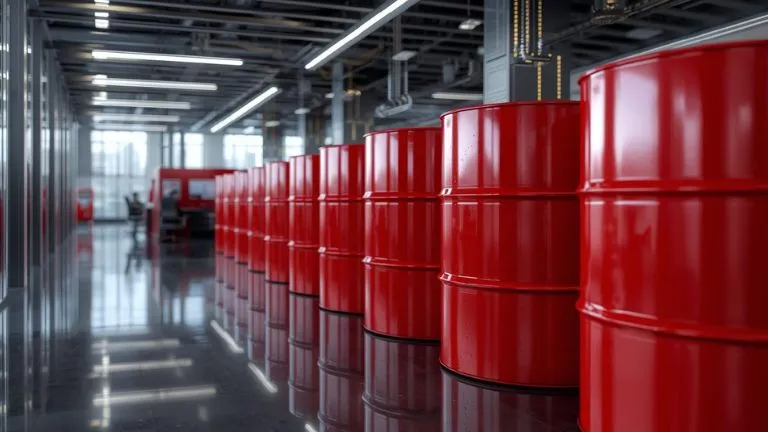
Crude oil prices are generally quoted in US dollars. That means wherever you are in the world, you’ll always pay for oil in dollars (hence the term ‘petrodollars’). So, if you see oil has a spot price of 71.00, one barrel of oil is currently trading for $71.00 in the underlying market.
When you trade oil with FXTM (or any online broker), you’ll see that the ‘buy’ price is above the underlying spot price, and the ‘sell’ price is below the underlying. This is due to the spread, which is how we charge you for your trade.
How many gallons are in a barrel of oil?
One barrel of oil is equivalent to 42 gallons. When oil production began, there was no standard container for oil, so it was stored and transported in barrels of different shapes and sizes.
The 42-gallon standard oil barrel was officially adopted by the Petroleum Producers Association in 1872.
What are oil futures?
Oil futures are contracts where a buyer and seller agree to exchange a specified number of oil barrels at a set price on a set date. They’re traded on exchanges and offer the possibility to capitalise on both rising and falling prices.
Companies often trade oil futures to lock in advantageous prices or protect against negative moves. However, they’re also popular with speculative traders. This is because they can settle the contract in cash, instead of taking delivery of actual oil barrels.
What are oil options?
Oil options are like a futures contract, except they come with no obligation to trade.
They give you the right to buy or sell an amount of oil at a set price on a set date, but you wouldn’t be contractually obliged to go through with it.
What impacts the price of oil?
Like almost all financial markets, the price of oil is primarily moved by the relationship between supply and demand. If demand for oil exceeds its supply, the price of oil will rise. But if demand falls and supply overwhelms the market, the price of oil will fall.
Generally, oil has a low elasticity of demand. This means that demand remains consistently high even when oil prices rise, given the global economy’s dependence on it.
The supply of oil is also considered inelastic, given how complex and costly it is to set up the oil extraction process. This is why you’ll see wild swings in the price of oil, which often impact the wider market.
There are a huge number of factors that can impact oil supply and demand, including:
Natural disasters
War or civil unrest
Seasonal changes
Population growth
Global economic performance
Shipping availability and freight rates
Storage availability
Demand for renewable energy
Popular oil trading strategies
Of course, before you start trading oil, you’ll want to make sure you have a clear trade strategy to help support your decisions.
Here are a few of the more common ways of trading oil as a commodity.
Day Trading
Day trading is a popular way to speculate on the price of oil due to the high volatility of the market. Day traders try to make small profits on lots of trades throughout the day, meaning they look for multiple opportunities in the space of a single trading session.
Day trading is generally better suited to people who’ve got plenty of time to commit. They’ll need to keep their finger on the pulse of the market and pay close attention to anything that could affect the price of oil.
Range trading
Range trading is when a trader tries to identify levels of support and resistance in an asset’s price movements. They’ll attempt to buy at levels of support and sell at levels of resistance.
Range trading is a good strategy for oil, as it works best in volatile markets where there isn’t a particular long-term trend in either direction.
Breakout trading
Breakout trading is where a trader tries to enter a position as soon as prices break out of its current range. This is based on the notion that a breakout could indicate that the price of the asset will start moving in the direction of the breakout.
Breakout traders can apply the same logic if they want to go short. They just enter a position after the price of an asset ‘breaks’ below a historical level of support. This means a breakout strategy can be used in both rising and falling markets – making it a popular choice for volatile markets like oil.

Put knowledge into action
Now you know how oil trading works, put your new knowledge to the test.
Practise trading on our risk-free demo or tackle the markets for real with a live account.
Frequently asked questions
You can trade oil on various platforms, including online forex and commodities brokers like FXTM, physical commodity exchanges, and financial markets like the New York Mercantile Exchange (NYMEX), Intercontinental Exchange (ICE), and Dubai Mercantile Exchange (DME). There are plenty of opportunities available to engage in trading of this precious commodity.
Oil is traded through various means, including futures contracts, exchange-traded funds (ETFs), options, and contracts for difference (CFDs). Buyers and sellers negotiate on the price of oil, and the transaction is typically settled in cash or by physical delivery of the commodity. As a result, trading in oil can be quite flexible and tailored to the preferences of individual traders.
To trade crude oil, you can open a trading account with FXTM. This can be an exciting and lucrative endeavor, as oil is consistently in high demand and a central cog in the global economy. With the right tools and knowledge, you can capitalise on its potential for profit by placing strategic trades and taking advantage of market movements.
Oil trading involves buying and selling oil in the financial markets. Traders speculate on the price movements of oil, based on various factors such as supply and demand, geopolitical events, and economic indicators. It can be an exciting and dynamic field, with potential for significant profits. With a careful strategy and a keen eye on market trends, you can work towards generating meaningful returns on your investment in oil trading.
The bottom line
Oil trading offers traders a dynamic opportunity to capitalise on one of the world’s most actively traded commodities.
By understanding what drives oil prices, such as supply and demand dynamics, geopolitical developments and market sentiment, and employing well-defined strategies, traders can navigate this volatile market more confidently.
Whether you’re exploring day trading, range trading, or breakout strategies, strong risk management and ongoing education remain essential for success.
With the right tools and approach, you can apply the insights from this guide to make informed decisions in oil markets.
Ready to dive in? Get started with an FXTM Practice account today.